
England
& Wales Hardwicke Marriage Index
Marriages
1754 - 1837
Littlehampton St Mary
| |
England
& Wales Hardwicke Marriage Index |
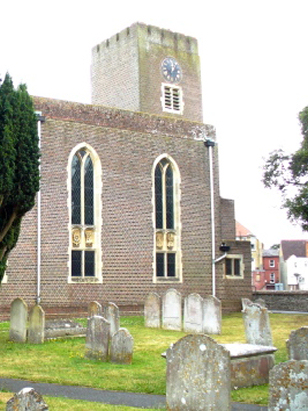
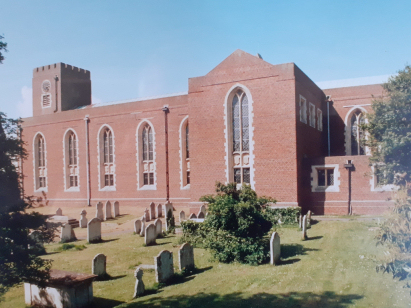
The ParishThe parish of Littlehampton lies on Sussex' English Channel coastline at the mouth of the River Arun, it sits roughly 4 miles south of the town of Arundel. Littlehampton stands as the southern terminus of the A284 road which links it to Arundel and onwards to the A29, Littlehampton is a substantial port, market town and coastal resort which has grown significantly in post medieval times, For much of the earlier period it was merely a small fishing settlement where boats were drawn up onto the beach and launched from there. Its expansion came from development of the Arun's frontage into a sea-port dealing with exports of primarily the fine oak timber of the Weald, by contrast its imports were a diverse collection of food items, wine and coal. Supporting the port a number of ship yards were developed employing at their peak some 200 men. Early maps show this original town as an eastward running main road with properties either side and amongst lanes to both north and south, the rod running from the port and the town terminating at St Mary's church. To this market town and port seaside fever hit in the early 1800s, the fashion for sea bathing created a subsidiary settlement beach-side separate until the late 19th century and lining the beach frontage. The wider parish was largely farmed with early gazetteers estimating roughly 2: 1 in favour of arable methods but both present. Modern developments arrived with the creation of a short spur line joining the town to the Brighton to Portsmouth line, a further spur to the coastal development. The two contrasting areas of the town moved Pevsner to describe Littlehampton as a mixture of Old Hastings and Bournemouth. Today Littlehampton is the western terminus of a lengthy stretch of urban coastline stretching from East Preston to the Arun's mouth, a stretch of almost 4 miles in part. As a coastal settlement most water flows directly into the Arun or the nearby English Channel. Littlehampton is sited at between sea level and 5 metres above it on a flat coastal plain that does not rise significantly until Arundel is reached. Littlehampton parish was relatively small consisting of just under 1,000 acres yet would have supported a population growing fast to around 2,250 by the end of this transcript period, the volume of marriages recorded is more indicative of an average during the period of closer to 1,100. By contrast Domesday Littlehampton was a tiny place of just 2 households, a single plough and a small meadow its only assets for its landholder Earl Roger of Shrewsbury. |
 |
|
|
|
| Register No | Covering Dates | Deposited With | Register Style | Quality Standard | Comments |
| 1 |
11th October 1754 - 14th December 1812 |
West Sussex Record Office - Reference - Par127/1/1/5 |
Standard preprinted and self-numbered combined Banns &
Marriage register with 4 entries per page |
Grade 2 Register - not a perfect read but with a low
likelihood of misreads |
None |
| 2 | 14th June 1813 - 21st June 1837 |
West Sussex Record Office - Reference - Par127/1/3/1 | Standard Rose style preprinted and prenumbered Marriage register |
Grade 2 Register - not a perfect read but with a low likelihood of
misreads |
None |
|
Lyminster
St Mary Magdalene
|
Lyminster
St Mary Magdalene
|
|
|
Climping
St Mary
|
 |
|
|
|
|
|
1760 1770 1780 1790 1800 1810 1820 1830
Corrections to Tinstaafl Transcripts