
England
& Wales Hardwicke Marriage Index
Marriages
1754 - 1837
Woolaston St Andrew
| |
England
& Wales Hardwicke Marriage Index |
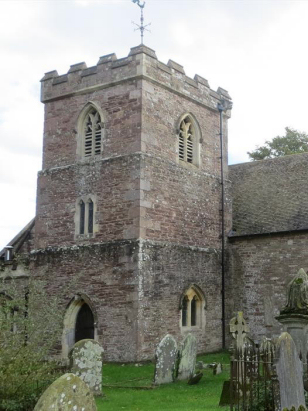
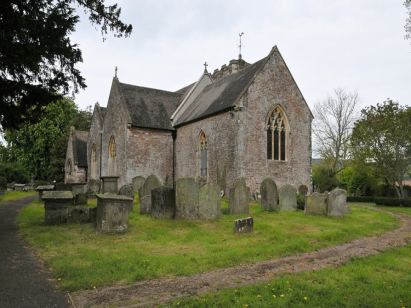
The ParishThe parish of Woolaston, often rendered Wollaston in early gazetteers, lies in southwestern Gloucestershire, west of the Severn and, thanks to a thin strip of its parish squeezed between Tidenham & Hewelsfield parishes, a very short stretch of the border with Monmouthshire and hence Wales along a meander of the Wye. Woolaston can be found roughly 5 miles northeast of the Monmouthshire town of Chepstow and sits on and mostly north of the A48 road linking Chepstow with Gloucester. The historic centre of Woolaston is that grouped around its church, early maps show the modern area carrying the village name to have once been named Netherend and that is the main settlement today, a short presence on the A40 with a lengthy extension northwest, ancient Woolaston sits roughly a mile south. Woolaston has a lengthy foreshore with the Severn estuary which would have supplied both fish and shellfish, coastal plains dotted with cattle on rich pastures whilst inland the extensive common saw grazing of sheep mainly in common, a few patches of arable varied the farming. Modern developments have come to the parish, the railway line between Gloucester & Chepstow also hugging the Severn's foreshore but not granting Woolaston a station. Twin brooks, the Cone Brook and Black Brook, drain the parish into the nearby estuary. Woolaston is sited at around 30 metres above the sea whilst Netherend rises to 60 metres in places, inland land rises onto the fore-hills of the nearby Forest of Dean to over 200 metres en route to Hewelsfield. Woolaston parish was extensive covering over 3,100 acres which would have supported a population of around 1,000 parishioners. Within Woolaston parish it and the manor at Plusterwine merited entries, both were holdings of William D'Eu and were small, collectively the two manors carried 8 ploughs, more profitable were the mill and 2 fisheries. |
 |
|
|
|
| Register No | Covering Dates | Deposited With | Register Style | Quality Standard | Comments |
| 1 |
20th February 1755 - 18th June 1755 |
Gloucestershire Archives - Reference - P376/IN/1/2 |
Plain, unruled book, a continuation of the extant
composite register in contravention of Hardwicke's segregation
& wording requirements |
Grade 2 Register - not a perfect read but with a low
likelihood of misreads |
None |
| 2 | 20th March 1757 - 24th December 1809 | Gloucestershire Archives - Reference - P376/IN/1/6 | Standard preprinted and self-numbered Marriage register with 4 entries per page | Grade 2 Register - not a perfect read but with a low likelihood of
misreads |
None |
| 3 | 3rd May 1810 - 25th January 1812 | Gloucestershire Archives - Reference - P376/IN/1/7 | Standard preprinted and self-numbered Marriage register with 4 entries per page | Grade 2 Register - not a perfect read but with a low likelihood of misreads | None |
| 4 | 21st February 1813 - 5th May 1837 | Gloucestershire Archives - Reference - P376/IN/1/8 | Standard Rose style preprinted and prenumbered Marriage register | Grade 3 Register - there are sufficient quality issues with this
register to indicate that some misreads will occur albeit few in
number |
Fading of this register may result in one or two misreads |
|
Alvington
St Andrew
|
||
 |
Alvington
St Andrew
Lydney St Mary |
|
|
|
|
1760 1770 1780 1790 1800 1810 1820 1830
Corrections to Tinstaafl Transcripts